Why do children experience EBSA?
Children can have anxiety about different aspects of school. This can be due to factors such as friendship issues, difficulties understanding the learning, or the sensory environment (for example, noise), which a child feels unable to cope with. For some children, it may be that they experience separation anxiety. Often, there are multiple factors that contribute to the anxiety that a child experiences.
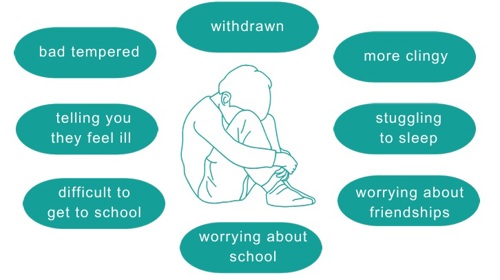
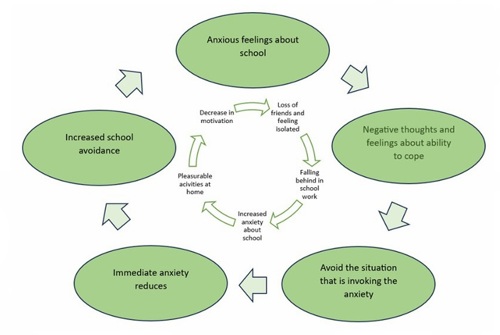
The diagram below shows how EBSA behaviours can develop.
While EBSA is typically identified when a child has been absent from school for an extended period, there can be a gradual build up to this. This can start with full attendance at school but experiencing anxiety before and/or during school, to patterns of non-attendance for specific days, to extended periods of absence. This is shown in the diagram below:
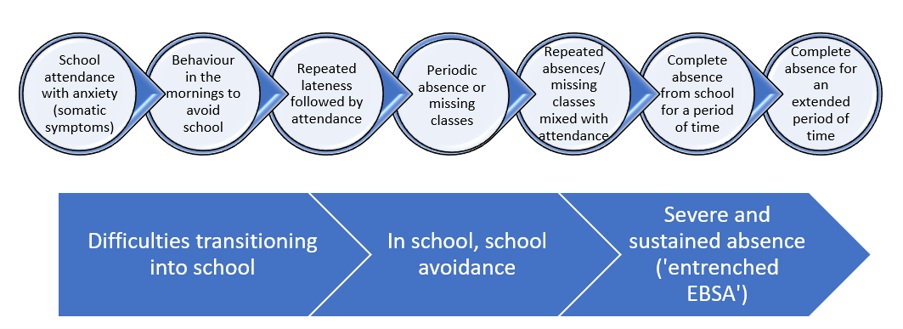
While some young people may gradually move along the above continuum, there may also be cases where there is a sudden onset of non-attendance as a result of a difficult or distressing event, or due to a build-up of anxiety over-time which may have gone undetected due to ‘masking’. ‘Masking’ refers to when an individual hides or suppresses symptoms, behaviours, or difficulties they are experiencing.