EBSA - working with your child
Where a child experiences emotional distress or anxiety associated with attending school, working with them involves a comprehensive and empathetic approach to address the emotional factors contributing to their avoidance. By consulting children about their own educational experiences, it fosters a sense of agency, responsibility, and engagement, ultimately contributing to a more positive and child-centred approach. When we met with young people locally, they were clear that they wanted to be involved in decision making and listened to. This is in line with the views of young people in Higgins’ (2022) doctoral thesis.
When considering an approach to gathering a young person’s views, it is important to consider a child’s age, level of understanding and language. Children can also struggle to communicate their feelings and thoughts; therefore, it is important to consider using visual prompts or drawing.
What should I do?
Create space to listen to your child
One of the most important ways you can support your child is to calmly listen to them and acknowledge that their fears are real to them. It is important to accept their feelings. Be curious and non-judgmental, as this will mean your child will be more likely to be able to open up about what they are finding difficult about school.
Whilst it is important to acknowledge their feelings and worries as real, it is also important to remain positive about school attendance and to reassure them that you and the school will work with them to make school feel like a happier place.
What you could say...
"I’ve noticed you’ve seemed worried about going into school a few days this week. It can feel hard to do
something when we are feeling worried. It’s important to understand how we can help you so that you can feel happier about going to school again."
A podcast by Dr Pooky Knight-Smith has some useful ideas about how to talk to your child to help understand what might be happening for them.
Talk about strengths as well as worries
As well as focussing on finding out about your child’s worries, try to find out about what things are going well in school, or what makes a school day feel better sometimes. Working on these strengths can really help to support school attendance.
How can I help my child?
It can feel 'kinder' for a child or young person to avoid the situation that is causing them to feel worried or anxious.
However, the more time they spend out of school, the stronger these feelings become and the harder it will be for them to return.
It is best to intervene and support a return to school as soon as possible.
Students who find it difficult to engage
Some students may be so anxious about attending school that they find it hard to communicate. Using sorting or drawing activities can work well for these students.
Offering a choice of activities or giving them some control, such as when or where they will do this activity or how much time they will spend with you, can also help.
Choosing where to start
The following activities can be a good way to try and understand the factors which may be impacting how your child feels about school. We often recommend they are completed with a trusted adult in school, but could also be completed at home and shared with school.
Creating distance from the problem
Externalisation
It can sometimes be helpful to support the young person to externalise the anxiety, so that they can start to view their anxiety as separate from their essential self.

This is a great opportunity to get creative and have fun using paints, playdough, clay and collage materials as you explore the anxiety with the young person. You could try asking:
- What would you call the feeling you have when you think about going to school?
- If your anxiety was a ‘thing’, what would it look like?
- Can you draw, paint or make it? What would it say?
- How does … get in the way of you coming to school?
- When is … in charge and when are you in charge?
Finding out where the feelings come from
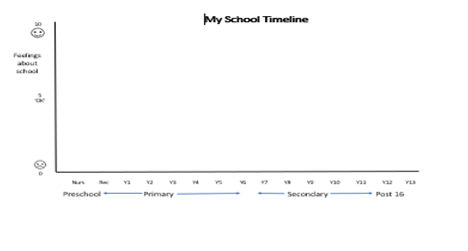
Explore triggering events, predisposing risk factors and protective factors by creating a timeline with the young person. You can download a School timeline template (Word document).
Explore awareness and understanding of emotions

Use a body map or tools from emotional regulation programmes, such as The Incredible Five Point Scale and Zones of Regulation. You can download the Zones toolkit (Word document).
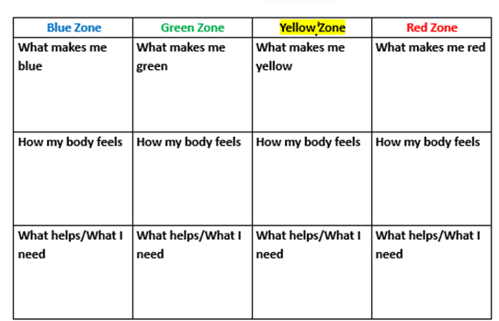
Ask about feelings and sources of anxiety around school
In addition to the activities above, there is a a ‘Pupil Voice’ activity which also explores a young person’s views about themselves, including strengths, and their perceptions of school. You can download a copy of the Pupil Voice activity (Word document).
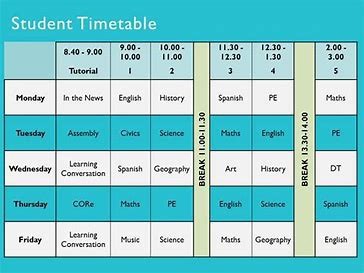
Mapping all aspects of the school environment can be a useful starting activity for students. Starting with a timetable reviewing and colouring different parts of the school day as Red, Amber or Green can be helpful. Once they have rated the lessons, explore what it is that made them choose that response to try and identify key themes (these often relate to relationships, learning or the environment).
You can then move on to do the same with a map of the school and different aspects of school life.
This is a good way to try and identify exceptions and strengths, as well as barriers.
West Sussex Educational Psychology Service has created a useful booklet for students who are out of school.
It is good to use with students who may not want to talk or who like to complete the activity at home.
Sorting activities
These are helpful for young people who struggle with verbal responses.
Card sort: function of school avoidance
This card sort activity, based on a School Refusal Assessment Scale developed by Kearney (2002), has been devised by Sheffield EPS as a tool to support staff to develop a greater understanding of a young person’s school avoidance.
By asking a child or young person to sort the statements or by talking about each one, mentors may find that using the cards can support an understanding of the function of the school avoidance behaviour.
The statements include:
- If I had less bad feelings (e.g. scared, nervous, sad) about school, it would be easier for me to go to school
- If it were easier for me to make new friends, it would be easier for me to go to school
- It would be easier for me to go to school if my parents went with me
- It would be easier for me to go to school if I could do more things I like to do more things I like to do after school hours (e.g. being with friends)
You can download a copy of the card sort activity (Word document).
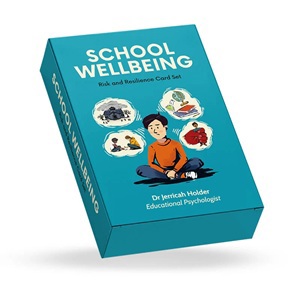
The School Wellbeing Cards are a set of child-centred tools grounded in resilience research. They reflect common risk and protective factors that underpin school connectedness, belonging and wellbeing. These cards align with the risk and resilience factors within the Risk and Resilience Scales.
- A video of how to use the profiles
- EBSA resilience questionnaire (PDF)
- EBSA risk questionnaire (PDF)
- Scoring template
- EBSA risk and resilience example profile (PDF)
Finding out about the school environment

The school environment: drawing the ideal school environment.
EdPsychEd have a resource for schools to support this activity - The Ideal School Activity Pack.
This tool developed by Williams and Hanke (2007) can be used to gain an insight into which features of the school (people, environment, lessons etc.) young people would like to change and why. This activity can be done using Lego, play equipment or drawing.
Remember
Keep going! Be persistent, consistent and hopeful
It is likely that there may be difficulties implementing the plan and these should be anticipated and solutions found. You should try to keep an optimistic approach, if your child fails to attend school on one day, start again the next day. It is also important to remember there is likely to be more difficulty after a school holiday, period of illness or after the weekend.
You may feel tempted to change schools, however research tells us that often difficulties will re-emerge in the new school and whenever possible it is normally better to try to resolve the issue in the current school.
Look after yourself
As a parent it can be really difficult to see your child unhappy. It can also put a lot of strain on your relationship with your child, if you are the one that has to get them to school everyday.
Our stress and worries as parents can impact on how our children feel. Some young people who experience EBSA talk about feeling guilt for causing their parents stress. It is natural for parents to feel stressed in this kind of situation and if you have someone to talk to, this can help you and your child. This could be a friend, family member or an organisation such as those listed at the end of this leaflet.
Remember you are doing your best in a difficult situation.
Further sources of support
Healthy Minds
Healthy Minds online information service provides information to young people about well being and has details about local services.
Bradford SENDIASS
Bradford SENDIASS provides free, confidential, and impartial information advice and support to children and young people aged 0 to 25 with SEND and their families in the Bradford district. Young people can also access the service independently. Parents, carers and young people can get in touch directly on
01274 513300 or email BradfordSENDIASS@barnardos.org.uk
YoungMinds
YoungMinds is a charity championing the wellbeing and mental health of young people. They publish a range of information for parents. They also have a parent helpline. Calls are free Monday to Friday from 9.30am to 4pm 0808 802 5544.
This page has been adapted from a leaflet originally written by the West Sussex Educational Psychology Service, who kindly gave Bradford Educational Psychology Team permission to adapt it to fit the needs of our Local Authority.
Accessibility
We know that some of the documents on this page are not accessible. If you have any problems accessing the documents please email EBSA@bradford.gov.uk.
